
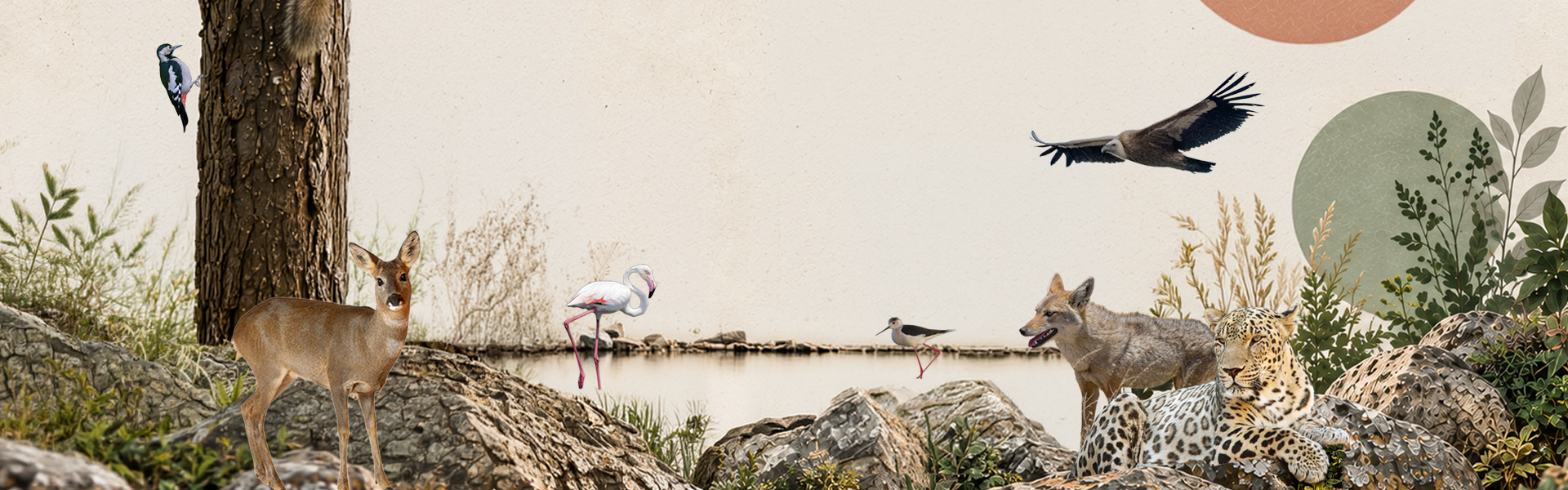
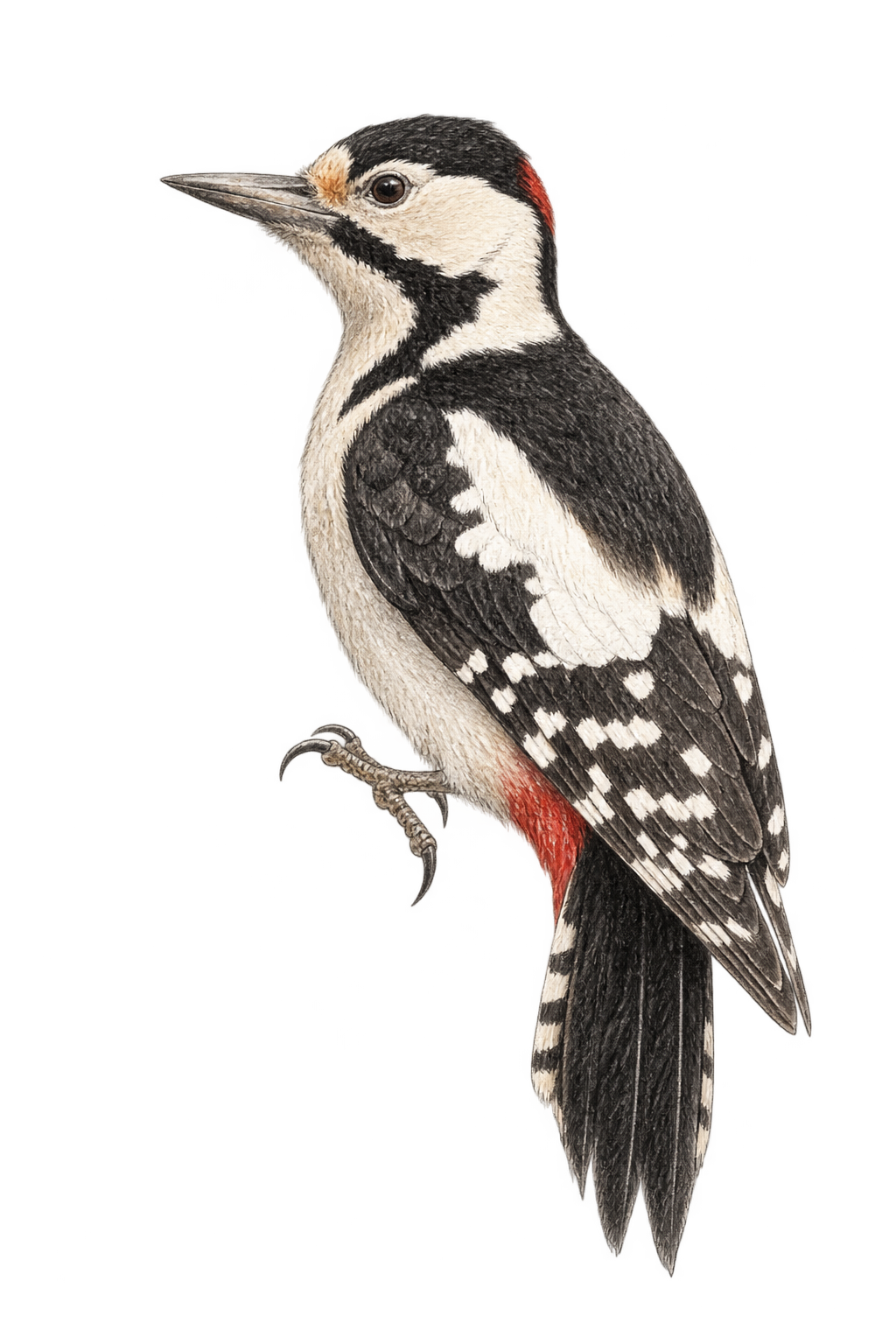
Photo 34. Physical characteristics and identification: A striking black-and-white woodpecker with dark back and head, two large white shoulder patches, pale cream or whitish underparts, and a bright red vent. The photographed bird is female; males have a bright red patch on the back of the head. It differs from the Great Spotted Woodpecker because the black moustache stripe does not connect to the back of the neck, leaving the white cheek and neck areas joined. Adaptations for climbing and drilling: It has a powerful straight, chisel-like bill for drilling wood, an extremely long sticky tongue with tiny barbs for extracting insects and larvae, zygodactyl feet with two toes forward and two backward for gripping vertical trunks, and stiff tail feathers used as a prop. Habitat and distribution in Kurdistan: It uses semi-open woodland, orchards, vineyards, parks and urban gardens rather than only dense forest. It is a permanent resident of Kurdistan and is regularly seen in mountain oak forests, orchards around Sulaymaniyah and other areas. Diet and behaviour: In spring and summer it mainly eats insects and larvae beneath bark. In autumn and winter it also takes seeds, acorns, walnuts and almonds, wedging nuts into a tree crevice and hammering them open. Rapid drumming on dry trunks is used not only for excavation but also to advertise territory and attract a mate.
View on Map