
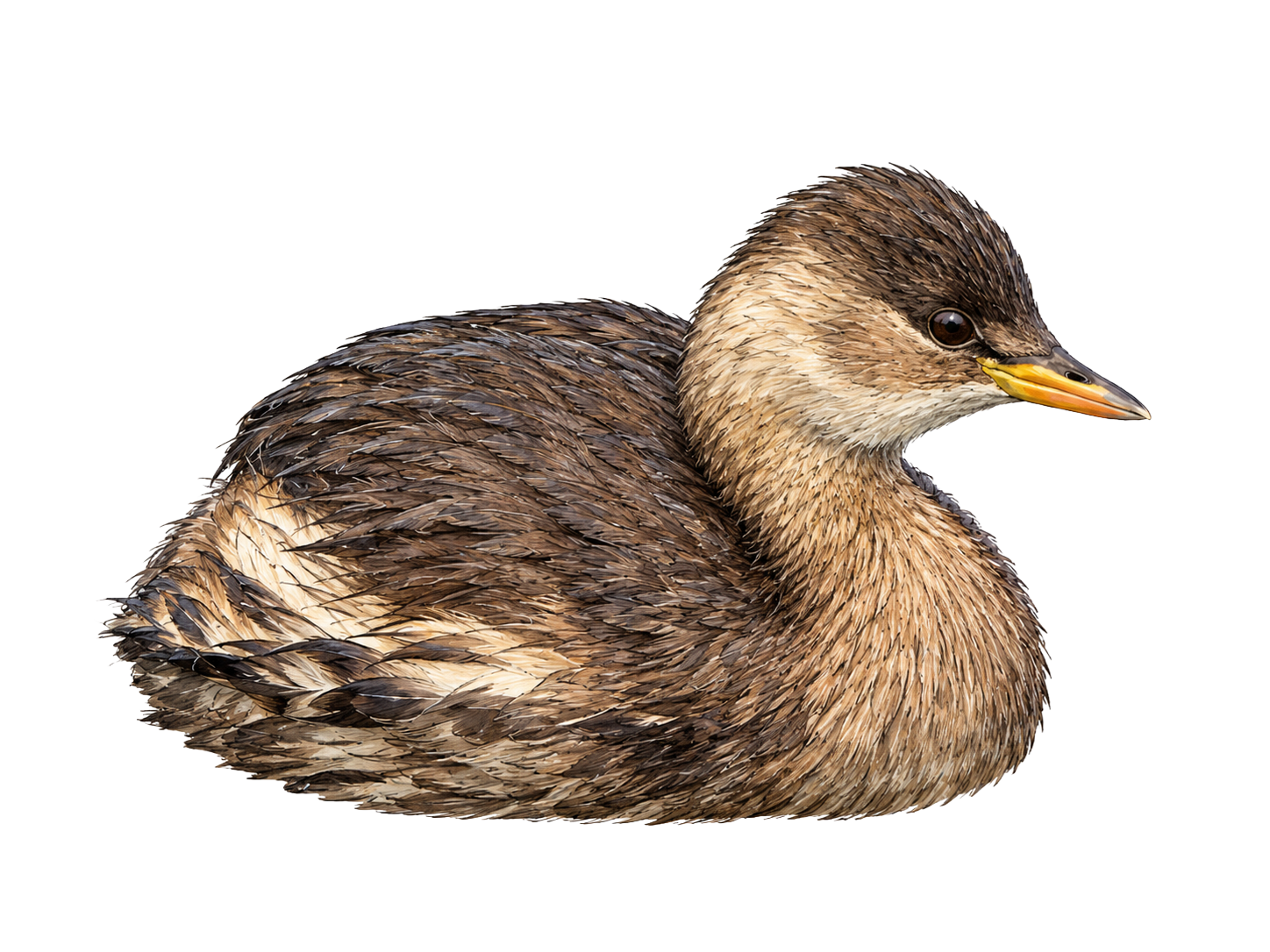
Photo 25. Physical characteristics: One of the smallest and most active diving birds in the grebe family. It is compact and rounded, measuring about 23–29 centimetres, with no obvious tail. In breeding plumage the body becomes darker, the head and back are dark brown to black, the face and neck turn bright chestnut, and a pale yellow patch appears at the base of the bill. In winter the plumage becomes paler grey-brown or earthy, with whitish throat and underparts. Its short, straight bill and legs set far back on the body make it an excellent swimmer but awkward on land. Habitat and distribution: It favours still or slow-moving waters with abundant aquatic vegetation and reeds, including small lakes, ponds, marshes and quiet river edges. It occurs in several wetland habitats across Kurdistan but can be difficult to detect because of its small size and habit of hiding among reeds. Diet and diving behaviour: It feeds mainly on aquatic insects, larvae, small crustaceans and very small fish. When hunting or alarmed it dives with remarkable speed, remains underwater for several seconds and may surface far from the point where it disappeared.
View on Map